A porch railing does two jobs at once. It keeps people from stepping off the edge, and it frames the whole front of your house. The right railing makes a porch feel finished, and the wrong one can pull the entire front of the home out of balance.
Below, we will walk through porch railing ideas by home style, compare the materials used on Louisville porches, cover the height and spacing rules to know before you build or replace, and show how a railing should tie into the columns and trim around it.
Porch Railing Ideas at a Glance
Pick the look that matches your home, then read the details below.
| Railing Style | Look | Often Suits |
|---|---|---|
| Classic square balusters | Simple and traditional, often painted white | Colonial, craftsman, and ranch homes |
| Turned spindles | Rounded, ornamental detail | Victorian and traditional homes |
| Horizontal rails | Clean lines and a modern farmhouse feel | Farmhouse and contemporary homes |
| Black metal balusters | Thin profile with strong contrast against white trim | Brick, stone, and painted exteriors |
| Cable or glass | Open sightlines | Modern homes and porches with a view |
| Half wall or solid panel | Enclosed and tied to the columns | Porches near the street or needing privacy |
Porch Railing Ideas
Classic Square Balusters
Square balusters between a top and bottom rail are the standard porch railing for a reason. The look is simple and traditional, and painted white it matches the trim on colonial, craftsman, and ranch homes without competing with it. If you are not sure where to start, this is the safe choice, and the proportions are easy to match to your existing columns.
Turned Spindles for Traditional and Victorian Homes
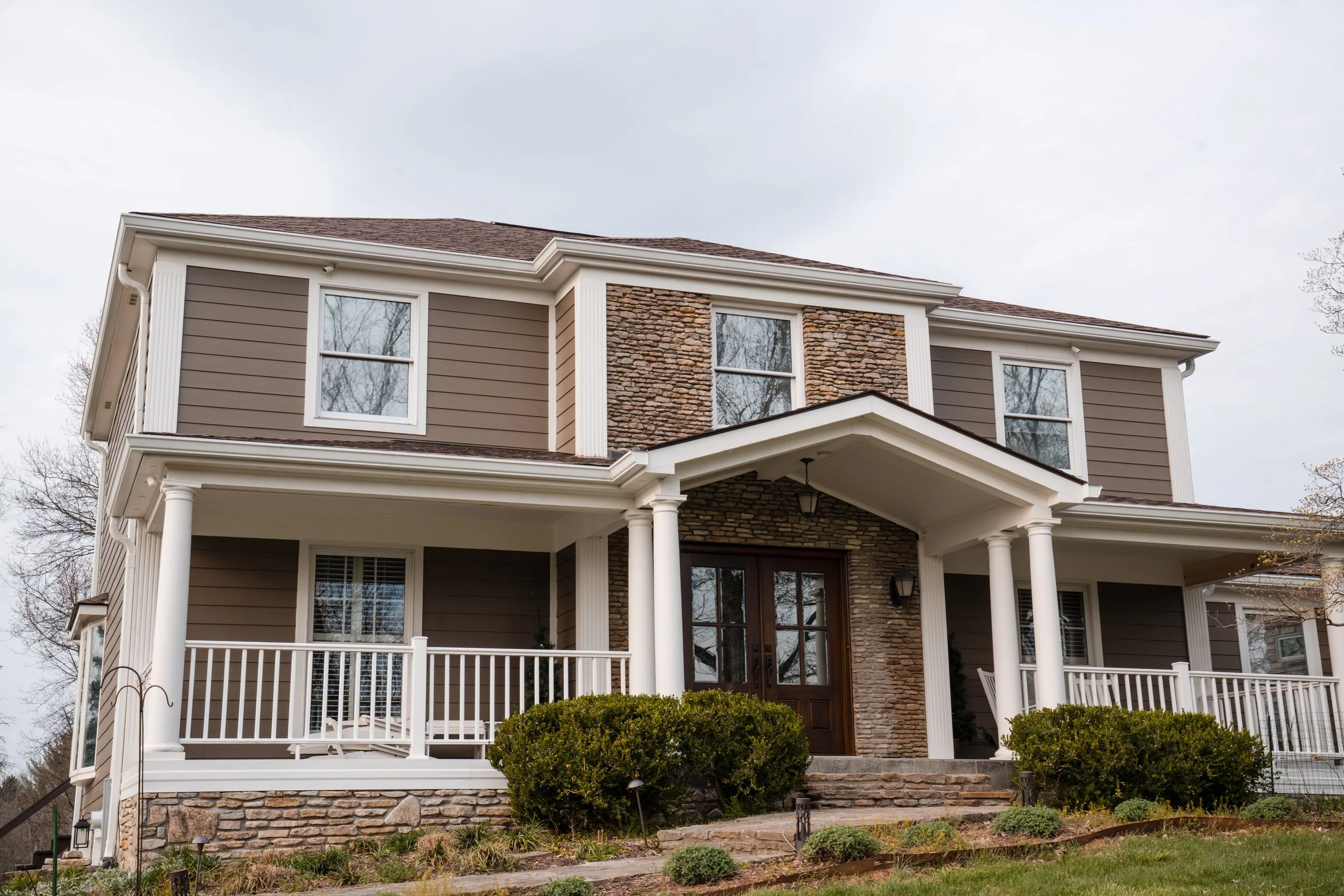
Turned spindles have rounded, shaped profiles that add detail, and they suit older homes with more ornate trim. On a porch with decorative brackets or detailed columns, they carry that character along the railing. On a plain, modern exterior they can look fussy, so match the level of detail to the rest of the house.
Horizontal Rails for a Farmhouse Look
Horizontal rails or boards replace upright balusters with long, clean lines. They suit farmhouse and contemporary homes and make a porch feel wider. The same opening rules apply as for any other style, so the spacing between rails still has to meet the limits covered below.
Black Metal Balusters With a White Top Rail
Thin black balusters under a white top rail create sharp contrast, and the slim profile keeps the view through the railing open. This pairing looks especially good against brick or stone, and it works well with white columns.
Cable or Glass for Open Views
Cable railing and glass panels keep sightlines almost completely open, which suits modern homes and porches that face a yard or a view. The same opening limits apply here too, so the spacing between cables still has to meet them. These styles read as very contemporary, so they fit best when the rest of the home is already modern.
Half Walls and Solid Panels
A half wall or solid panel encloses the porch more than open balusters do, and it can echo the columns, brick, or stone on the front of the house. It works well on porches close to the street, where privacy matters, and it gives the porch a grounded, built-in feel. The tradeoff is less airflow and a heavier look.
Porch Railing Materials
Louisville's humid summers, ice, and freeze-thaw cycles are hard on anything outdoors, so the material matters as much as the style. New Look Roof builds porches for Kentucky weather, and these are the common choices.
| Material | Look | Upkeep | Often Used On |
|---|---|---|---|
| Wood | Classic and paintable | Needs regular sealing or repainting, and can rot where moisture sits | Historic, craftsman, and traditional homes |
| Aluminum | Slim, usually black or white | Does not rust and needs no repainting | Modern and traditional homes |
| Vinyl | Clean and uniform | No painting, and wipes clean with soap and water | Simple, low-upkeep porches |
| Composite | Wood-like appearance | Resists rot and needs no painting | Porches that want a wood look with less upkeep |
| Wrought iron or steel | Ornate or sleek | Strong, but needs a protective coating to guard against rust | Traditional and ornate designs |
Wood gives you the most traditional look and the most upkeep. Aluminum, vinyl, and composite trade some of that character for far less maintenance. Whatever you choose, the posts and the connections to the porch structure matter as much as the railing itself.
Porch Railing Height and Spacing Rules in Louisville
Louisville Metro's guidance for decks says guardrails are required when the walking surface is more than 30 inches off the ground. They must be at least 36 inches tall, and any opening has to be small enough that a 4-inch ball cannot pass through. That page is written for decks, so ask Louisville Metro or a licensed contractor to confirm the rule for your porch.
The same page says an attached deck or porch you are building needs a building permit because it is part of the main structure. If your home is in a preservation district or overlay zone, exterior changes need approval before a building permit, and some smaller cities inside Louisville Metro may require extra approvals. New Look Roof manages the permitting process for porch projects, so you are not sorting through that on your own.
Railings are structural, not just decorative. The Consumer Product Safety Commission estimates about 2,900 injuries and two deaths between 2016 and 2019 were associated with collapses and failures of decks, balconies, and porches, which is why solid posts and secure connections matter as much as the style you pick.
Tying a Railing Into Your Columns and Trim
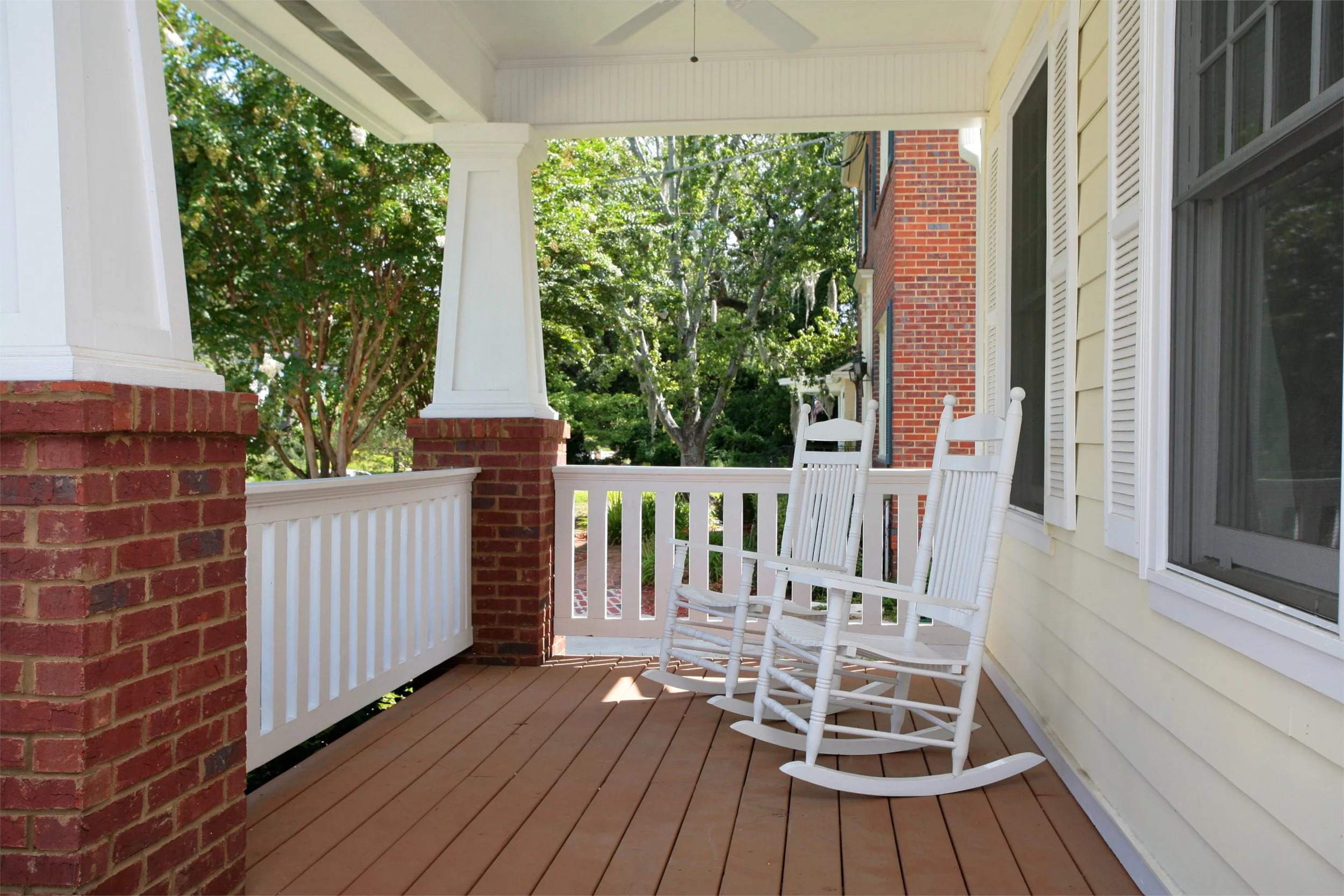
A railing should look like it belongs with the columns, trim, and roofline around it. Match the rail color to the trim for a clean, unified look, or choose deliberate contrast, like black balusters with white rails, so it reads as a choice. Keep the top rail at a consistent height where it meets the columns, and carry the same trim profile through the porch so no piece looks borrowed from a different house.
That is how New Look Roof approaches every porch: each one is built to tie into your existing roofline, siding, and trim. For more on color and trim, see our front porch decor ideas, and for the bigger picture on styles, see our porch designs guide.
Planning a new porch or updating an existing one? Contact New Look Roof to discuss railing options that complement your home.
Frequently Asked Questions
What are some good porch railing ideas? Good porch railing ideas include classic square balusters, turned spindles, black metal balusters with a white top rail, horizontal rails, and half walls. The right choice depends on your home's style, so match the level of detail in the railing to the trim and columns around it.
How tall does a porch railing need to be in Louisville? Louisville Metro's guidance for decks requires guardrails when the walking surface is more than 30 inches off the ground, at least 36 inches tall, with no opening a 4-inch ball can pass through. That guidance is written for decks, so confirm the rule for your porch with Louisville Metro or a licensed contractor.
What is the best material for a porch railing? There is no single best material. Wood gives the most traditional look but needs regular sealing or repainting. Aluminum, vinyl, and composite need far less upkeep, which helps in Louisville's humidity and freeze-thaw cycles. Pick based on your home's style and how much maintenance you want.
Do I need a permit to replace a porch railing? Louisville Metro says a deck or porch attached to your home needs a building permit because it is part of the main structure, but its guidance does not spell out smaller jobs like replacing a railing. Call Louisville Metro's Construction Review office or ask a licensed contractor before you start.
Should my porch railing match my columns? Matching the railing color to the columns and trim keeps the porch looking unified, while deliberate contrast, like black balusters against white trim, can look just as intentional. Either works as long as the proportions and level of detail fit the rest of the house.