Key Differences Between a Three-Season Porch and Four Season

Most porches get used hard for about half the year and mostly ignored the other half. If you have ever wondered whether there is a way to change that, you are really asking about one of two options: a three-season porch or a four-season porch. Both extend how long you can use the space, just in very different ways and to very different degrees.
According to NAR's Remodeling Impact Report, homeowners who complete outdoor upgrades like this one tend to actually use the space more, which is really the whole point of choosing between these two options in the first place. Below, we will cover what separates a three-season porch from a four-season porch, which situation each one tends to fit, and how New Look Roof can help you build either one.
What Makes a Three-Season Porch?
A three-season porch is built to extend comfortable use through spring, summer, and fall, without being designed for winter. It is usually enclosed with screens, and sometimes lightweight glass or vinyl panels, but it does not include insulation or a connected heating and cooling system. Airflow and shade do most of the work here, often helped along by a ceiling fan or two.
Because there is no permanent climate control involved, a three-season porch is a lighter structural project than a four-season conversion. It is also the more common upgrade for homeowners who mainly want relief from bugs, wind, and direct sun rather than a fully conditioned room.
What Makes a Four-Season Porch?
A four-season porch is built to function as a true year-round room, which means it needs to perform like the rest of your house during a cold Kentucky winter. That typically means insulated walls and flooring, energy-efficient windows in place of screens, and a connection to heating and cooling, either tied into your existing HVAC system or handled with a dedicated mini-split.
This is a more involved structural project than a three-season build, since the porch essentially becomes conditioned living space rather than a covered outdoor area. The payoff is a room you can genuinely use in January the same way you would in July.
Key Differences at a Glance
| Feature | Three-Season Porch | Four-Season Porch |
|---|---|---|
| Insulation | Not included | Fully insulated walls and flooring |
| Heating and Cooling | None, relies on airflow and shade | Connected HVAC or dedicated mini-split |
| Enclosure Type | Screens, sometimes lightweight glass or vinyl panels | Energy-efficient windows |
| Usable Months in Kentucky | Spring through fall | Year-round |
| Project Scope | Lighter structural project | More involved, becomes conditioned living space |
Which One Fits Your Home?
Neither option is the "better" choice across the board. It really comes down to how you actually want to use the space. If you mainly want a bug-free, shaded spot to enjoy spring through fall, a three-season porch delivers that without the scope of a bigger build. If you are picturing a room you will use just as much in January as you do in July, whether as a reading nook, a home office, or extra entertaining space, a four-season porch is the option built for that.
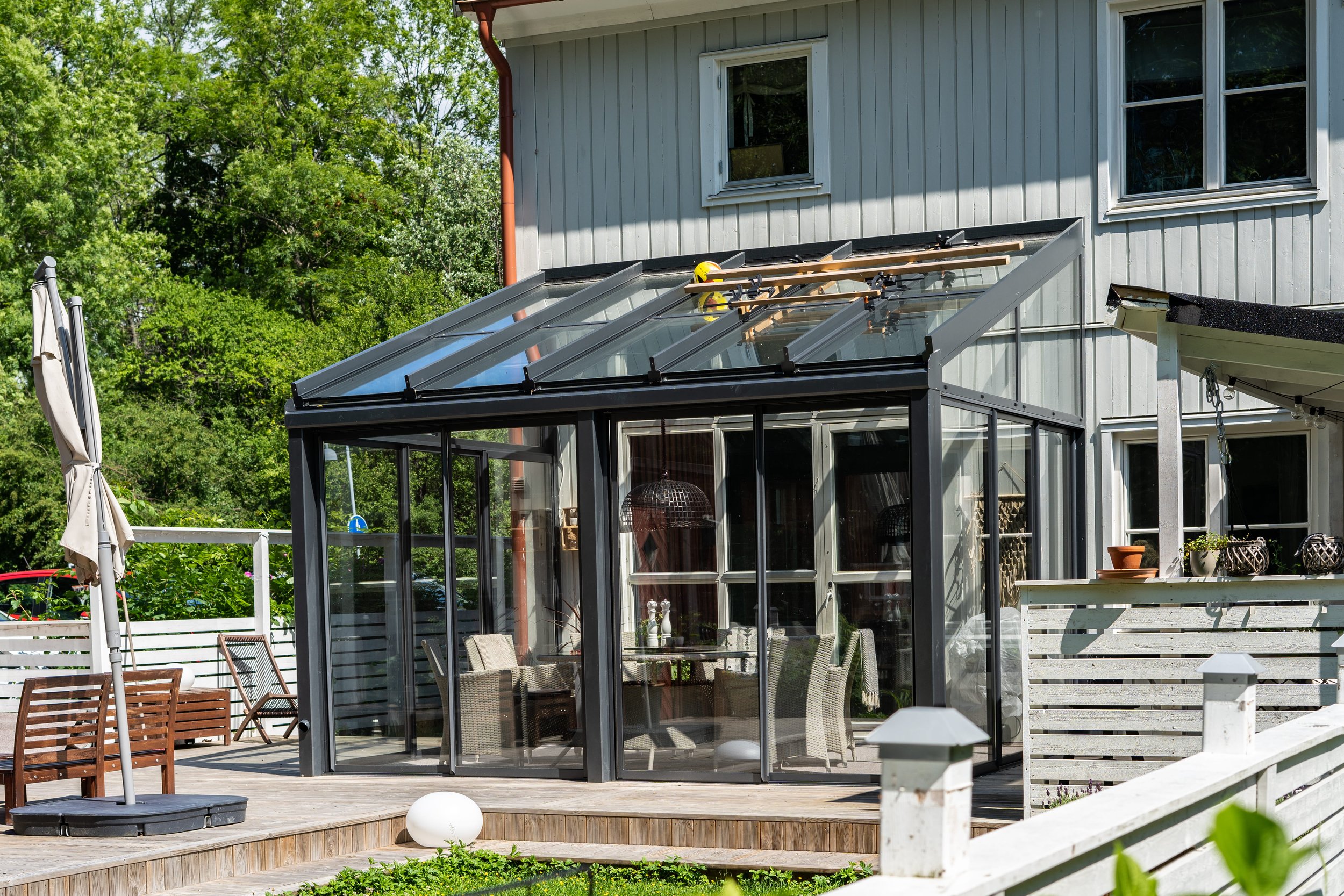
Your existing porch also plays a role. A porch with a solid roofline and structure already in place is often a strong candidate for a three-season screen-in as a starting point, with the option to upgrade to four-season later if you decide you want it. New Look Roof handles both approaches, from a straightforward screen-in to a full four-season build.
A few practical factors are worth thinking through beyond just preference. Consider how your existing porch is oriented: a porch that faces west or south deals with more direct sun and heat buildup, which matters more if you are leaning toward a four-season conversion with year-round HVAC demands. How your home is currently heated and cooled also plays a role, since tying a four-season porch into your existing system is usually simpler than installing a fully separate unit. And if you are picturing the space as a genuine extension of your home, somewhere you would walk to from the kitchen or living room without grabbing a coat, that is usually a strong signal you are looking at a four-season build rather than a three-season one.
Permits and Porch Conversions in Louisville
Most porch and patio enclosure projects in Louisville Metro require a building permit, since an attached deck or porch is considered part of your home's main structure rather than a separate addition. That holds true whether you are screening in an existing covered porch or building a new three-season space from scratch.
Four-season conversions typically involve more review, since adding insulation, electrical work, and a connected HVAC system brings energy and mechanical code requirements into the process on top of the standard structural review. None of this needs to fall on you to sort out. New Look Roof handles permitting as part of the build process, so you are not stuck deciphering Louisville Metro's Construction Review requirements on your own.
Frequently Asked Questions
Can I convert my three-season porch to a four-season porch?
In most cases, yes, as long as the existing structure can support the added insulation, windows, and climate control. A quick on-site evaluation is usually the fastest way to find out what your specific porch can handle.
Can you put regular furniture in a three-season porch?
Regular indoor furniture is not ideal for a three-season porch, since the space is still exposed to humidity, temperature swings, and some airflow. Furniture built for outdoor or three-season use tends to hold up much better over time.
Does a three-season porch add value?
A three-season porch can add both usable space and appeal to a home, though value impact depends heavily on the local market, the quality of the build, and how well it ties into the rest of the house. It is best viewed primarily as a lifestyle upgrade rather than a guaranteed resale return.
Which type of porch is best?
There is no single best option. It depends on how you plan to use the space. A three-season porch fits homeowners who want a lighter-scope upgrade for warmer months, while a four-season porch fits homeowners who want a genuine year-round room.
Do I need a permit to convert my porch?
Most three-season and four-season porch conversions in the Louisville area require a permit, especially when the project involves new framing, electrical, or HVAC work. A licensed contractor can confirm exactly what your specific project needs before work begins.