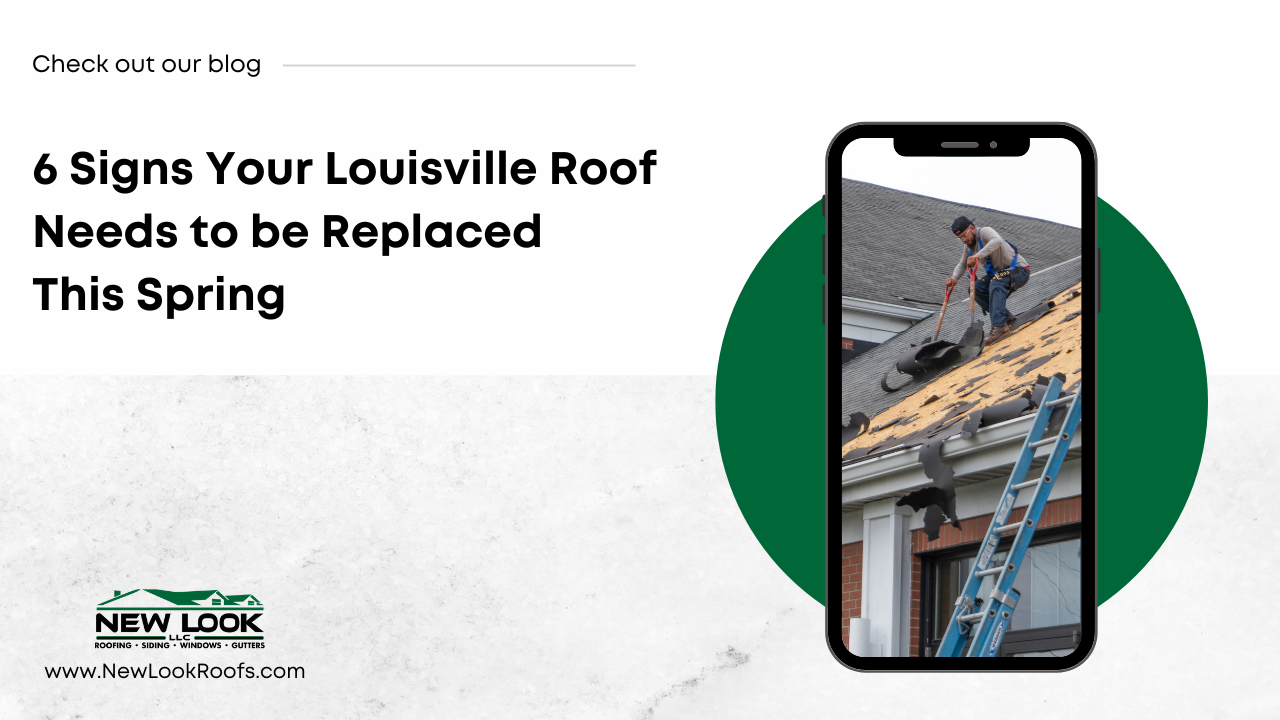
6 Signs Your Roof Needs Replacing This Spring
Spring is the season Louisville roofs reveal what winter left behind. Freeze-thaw cycles, ice, and months of heavy moisture do their damage quietly. Then April arrives, and the evidence shows up all at once: in your gutters, on your ceiling, and across your shingles.
The good news is that catching these warning signs now, before Louisville's spring hail season kicks into full gear, puts you in control. You can schedule on your terms instead of calling for emergency repairs after a storm.
Here are the six signs to look for right now.
1. Your Roof Is 20 Years Old or More
Age is the most reliable indicator that a roof needs replacing. Architectural asphalt shingles, the most common type installed in Louisville homes, typically last 20 to 30 years depending on installation quality, ventilation, and weather exposure. Three-tab shingles have a shorter lifespan, often 15 to 20 years in Kentucky's climate.
If your roof was installed before 2005 and has never been replaced, it is likely at or past the end of its useful life. Even if it looks fine from the driveway, internal wear may already be compromising its ability to protect your home.
2. You See Curling, Buckling, or Missing Shingles
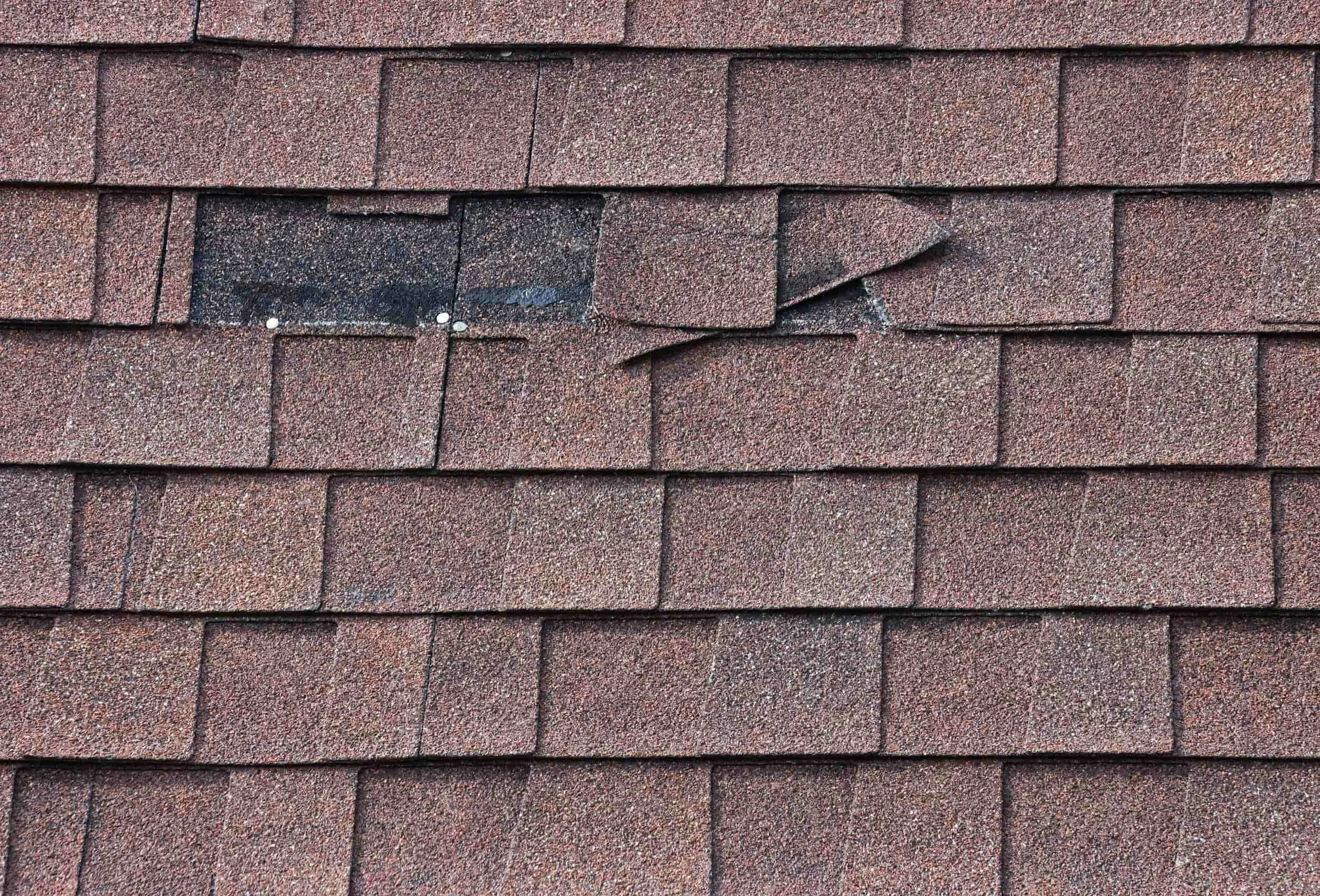
Walk around your home and look up. Healthy shingles lie flat against the roof deck. If you notice shingles that are curling at the edges, buckling into waves, or missing entirely, those are clear signs of failure.
Curling and buckling happen when shingles absorb moisture, lose flexibility, or suffer from poor attic ventilation. Once shingles lose their shape, they can no longer seal against wind-driven rain. Missing shingles leave the underlayment exposed and vulnerable to any storm that comes through.
This is not a cosmetic issue. It is a structural one.
3. Granules Are Collecting in Your Gutters
Asphalt shingles are coated with granules that protect the underlying material from UV rays and weather. Over time, those granules wear off. When they do, your shingles degrade rapidly.
After a rain, check your gutters and downspout outlets. A small amount of granule buildup is normal on a newer roof. On a roof that is 10 or more years old, heavy accumulation is a warning sign that the shingles are reaching the end of their life. Bald patches on the shingles themselves are even more telling.
4. You Have Water Stains on Your Ceilings or Walls
Brown rings or yellowish stains on your interior ceilings and upper walls almost always trace back to a roof leak. The stain often appears far from the actual entry point, because water travels along rafters and decking before dripping through.
Do not wait on this one. By the time water stains are visible inside your home, moisture has likely been present long enough to cause damage to insulation, decking, or framing. A professional inspection will find the source.
5. Your Roof Is Sagging in Any Area
A sagging roofline is a structural emergency. It means the decking beneath the shingles has absorbed significant moisture and lost its integrity. In some cases, it indicates damage to the rafters or trusses beneath.
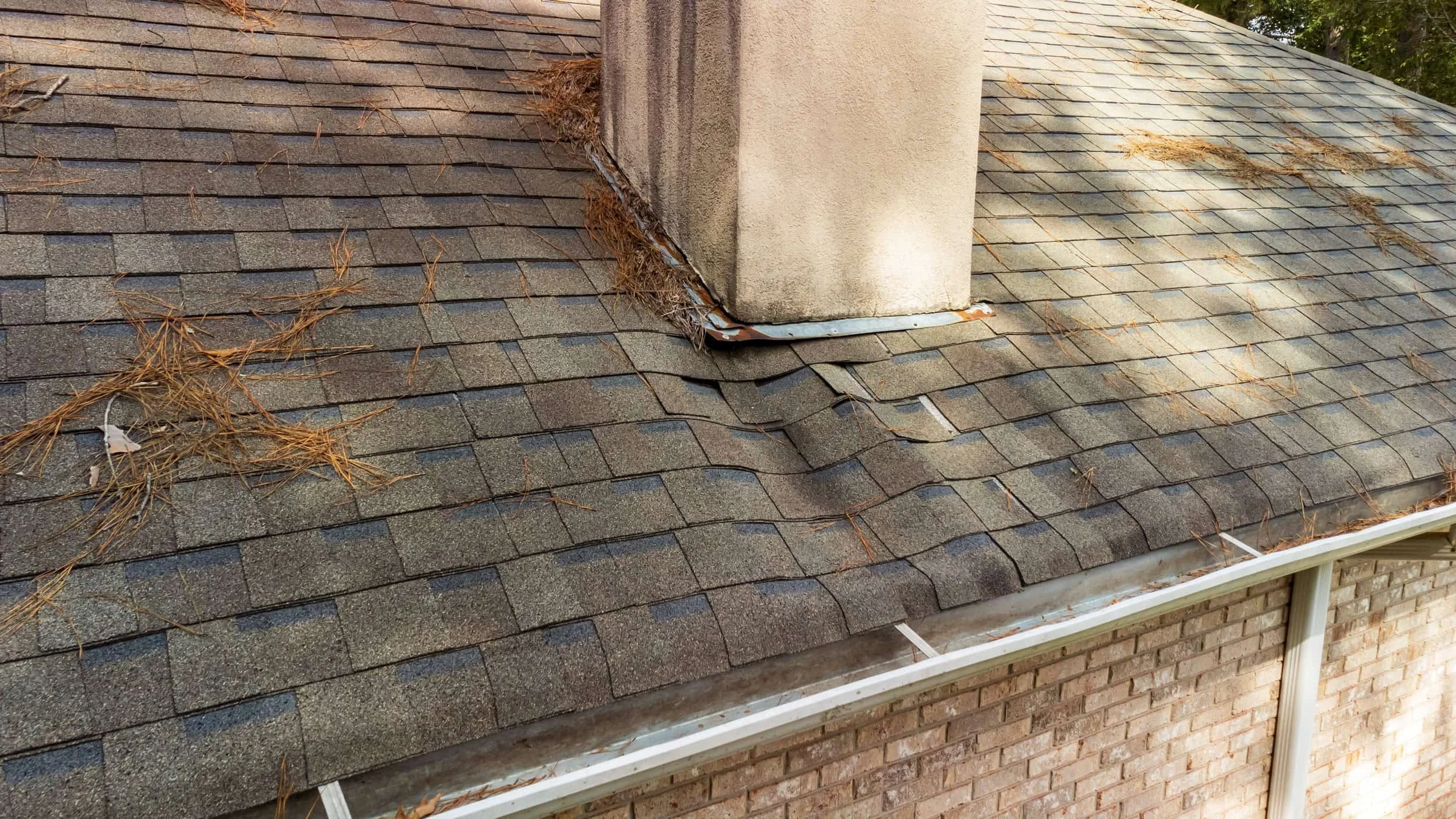
Sagging does not improve on its own. Left unaddressed, it puts your home at risk of more serious structural damage, particularly during heavy snow loads or high winds. If you see any portion of your roofline dipping or curving where it should be straight, call a professional immediately.
6. Your Energy Bills Have Increased Without a Clear Cause
A compromised roof affects your home's insulation performance. When shingles fail, moisture works its way into the attic and degrades insulation, allowing heat to escape in winter and enter in summer. If your heating and cooling costs have climbed noticeably over the past year and you cannot point to another explanation, your roof is worth inspecting.
This is one of the subtler signs, but it is common in Louisville homes where older roofs have been silently failing through seasonal temperature swings.
Why Spring Is the Time to Act in Louisville
Louisville sits in an active weather corridor. The area has logged more than 120 hail reports within 10 miles of the city center since 2004, with spring being the most active season. April through June brings the highest concentration of severe storms, hail events, and high winds of the year.
If your roof is already showing any of the signs above, a spring storm will not improve the situation. It will accelerate the damage and likely push a manageable repair into a full emergency replacement.
Getting an inspection now, while the weather is mild, gives you time to make a clear-headed decision about repair versus replacement before Louisville's storm season peaks.
Should You Repair or Replace?
Not every issue requires a full replacement. Here is a simple framework.
Repair is likely the right call when: Your roof is under 15 years old, the damage is isolated to one area, and there are no signs of widespread granule loss or structural compromise.
Replacement is likely the right call when: Your roof is 20 or more years old, you are seeing multiple warning signs across different areas of the roof, or you have had repeated leaks that keep returning after repairs.
A professional inspection will give you a clear answer. At New Look, we give honest assessments and walk you through both options so you can decide based on facts, not pressure.
Frequently Asked Questions
Q: How do I know if my roof damage is from winter or just normal aging?
Both are possible, and often they work together. Freeze-thaw cycles put significant stress on shingles, flashing, and the roof deck. Winter damage tends to show up at seams, around penetrations like vents and chimneys, and in areas where ice may have pooled. Normal aging shows up more uniformly across the whole surface. A spring inspection distinguishes between the two and tells you exactly what you are dealing with.
Q: Can I inspect my roof myself?
You can do a ground-level visual check with binoculars for obvious signs like missing shingles, visible sagging, or debris accumulation. However, a professional inspection covers the attic, flashing, underlayment, and areas not visible from the ground. For a roof that is more than 15 years old or showing any warning signs, a professional inspection is worth scheduling before making any decisions.
Q: How long does a roof replacement take in Louisville?
Most residential roof replacements are completed in a single day. Larger homes or roofs with complex pitch and multiple valleys may take two to three days. New Look completes most jobs within one day and leaves the job site clean at the end of every project.
Q: Does homeowners insurance cover roof replacement in Louisville?
Most standard homeowners policies cover storm damage from hail, wind, and fallen trees. Given how active Louisville's spring storm season is, many homeowners in the area have legitimate claims they never pursue. The key is documenting damage promptly after a storm and working with a contractor who understands the insurance process. New Look works directly with insurance carriers and guides homeowners through the claim from inspection to completion.
Schedule Your Free Roof Inspection With New Look
If you are seeing any of these signs, the right next step is a professional inspection. New Look is Louisville's Owens Corning Platinum preferred roofing contractor, which means our team meets the highest standards for insurance, workmanship, and quality.
Inspections are free, there is no obligation, and most jobs are completed in a single day.
Book a free estimate and find out exactly what your roof needs before the next storm rolls through.
Call us at (502) 341-4415 or request your free inspection online.