The Window Installation Process: What to Expect
Replacing your windows is one of those projects that homeowners put off longer than they should. The windows still open. They still close. How bad can they really be?
The answer, for a lot of homes, is worse than you'd think. Old windows are one of the most common sources of energy loss in a home, and in a climate that swings between hot humid summers and cold winters, that adds up fast. According to Energy Star, certified replacement windows reduce heating and cooling costs by an average of 13% nationwide compared to non-certified products. A recent survey by This Old House found that nearly half of homeowners who replaced windows for energy efficiency reported saving at least $50 per month on energy bills.
But energy savings aside, most homeowners who've been through a window installation are surprised by two things: how straightforward the process is and how much better their home looks and feels when it's done.
Here's what to expect from start to finish.
When Does Window Installation Make Sense?
Not every old window needs to be replaced immediately. Here are the clearest signs it's time to stop waiting.
Drafts near the frame. Run your hand along the edge of a closed window on a cold day. If you feel air movement, the seal has failed. That's conditioned air leaving your home every hour of every day.
Condensation between the panes. Fogging or moisture between the glass layers means the insulating seal has broken down. The window is no longer doing its job thermally and won't improve without replacement.
Difficulty opening, closing, or locking. Windows that stick, jam, or won't lock properly are a security and safety issue, not just an inconvenience.
Single-pane glass. If your home still has single-pane windows, you're losing a significant amount of energy through the glass itself. Modern double-pane windows with low-E coatings are dramatically more efficient.
Windows approaching 20 years old. Most standard residential windows have a lifespan of 15 to 25 years. If yours are in that range and you're seeing any of the above, replacement is likely the right call.
The Window Installation Process Step by Step
Step 1: Free Estimate and Measurement The process starts with a free in-home consultation. A professional measures each opening precisely, assesses the condition of the frames and sills, and helps you choose the right window style and material for your home. Accurate measurements at this stage are what make installation day go smoothly.
Step 2: Window Ordering and Scheduling Replacement windows are typically custom ordered to fit your existing openings. Lead times generally run two to four weeks depending on the manufacturer and the time of year. Once your windows arrive, your installation date gets confirmed.
Step 3: Installation Day Most window installations are completed in a single day. A crew arrives, removes the existing windows one at a time, and installs the new units. Each window gets properly sealed, insulated, and tested before the crew moves to the next one. Interior and exterior trim is finished cleanly so the result looks intentional, not patched.
For a standard home replacing several windows, plan for a full day of work. The crew will be moving from room to room, so expect some disruption inside the house during the process.
Step 4: Cleanup and Walkthrough Old windows and materials are removed from the property. Before leaving, the crew walks through each installation with you to confirm everything opens, closes, locks, and seals correctly. If anything needs adjustment, it gets handled on the spot.
What to Do Before Installation Day
A little preparation makes the day go faster and protects your belongings.
Clear the area around each window on the interior. Move furniture, blinds, curtains, and any items on windowsills before the crew arrives. The more accessible each window is, the faster the installation moves.
If you have window treatments you want to keep, remove and store them ahead of time. Installers will work around what's there, but having a clear workspace makes the job cleaner.
Plan to be home or have someone there who can walk through the finished work at the end of the day.
What Makes a Good Window for Louisville's Climate
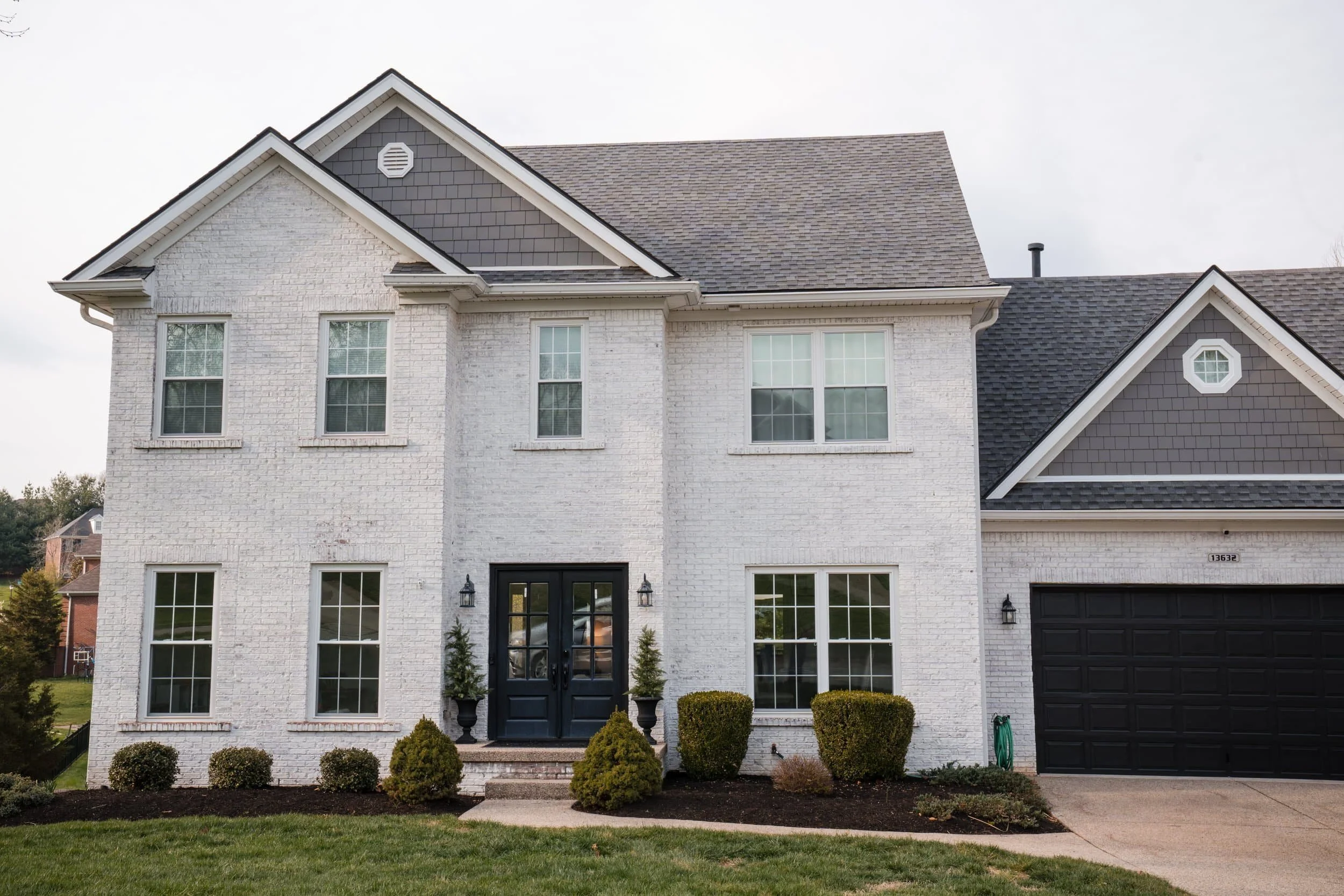
Louisville sits in a mixed-humid climate zone, which means windows need to handle both heating season and cooling season effectively. The key specs to look for are a low U-factor for winter heat retention and a low Solar Heat Gain Coefficient for summer sun management.
Double-pane windows with low-emissivity coatings and argon gas fill are the standard choice for Louisville homes. They provide significantly better insulation than older single-pane or early double-pane windows without the premium cost of triple-pane units.
It's also worth noting that qualifying Energy Star certified windows are currently eligible for a federal tax credit of up to $600 per year through 2032, under the Inflation Reduction Act's Energy Efficient Home Improvement Credit. If you're replacing windows this year, ask about which products qualify.
Ready to See What New Windows Would Do for Your Home?
New Look Roof installs replacement windows across Louisville and surrounding communities. Our team will measure your openings, walk you through your options, and give you a clear estimate with no pressure.
You can learn more about our window installation services or book directly below.
Book a free estimate today and find out what new windows would do for your home's comfort and energy bills.
Frequently Asked Questions
How long does a window installation take in Louisville? Most residential window installations are completed in a single day. The exact time depends on how many windows are being replaced and the accessibility of each opening. A full-house installation covering ten or more windows may run into a second day on larger homes.
Do I need to be home during window installation? Yes, it's a good idea to be home or have someone there throughout the installation. You'll want to do a walkthrough at the end of the day to confirm each window opens, closes, locks, and seals correctly before the crew leaves.
How much can I save on energy bills with new windows? According to Energy Star, certified replacement windows reduce heating and cooling costs by an average of 13% nationwide. A 2025 survey by This Old House found nearly half of homeowners who replaced windows for energy efficiency saved at least $50 per month on energy bills.
Are new windows eligible for a tax credit? Yes. Energy Star certified windows currently qualify for a federal tax credit of 30% of the cost, up to $600 per year, through 2032 under the Inflation Reduction Act. Ask your installer which products qualify before finalizing your selection.
How do I know if I need full window replacement or just a repair? If the issue is a broken lock, damaged hardware, or a cracked pane in an otherwise sound frame, a repair may be sufficient. If you're seeing fogging between panes, drafts around the frame, or windows that are more than 20 years old, full replacement is almost always the better long-term investment.